Vietnam and U.S. Tariff Update: March 2026
What the Supreme Court Ruling Means for Bespoke Backpacks and Outerwear.
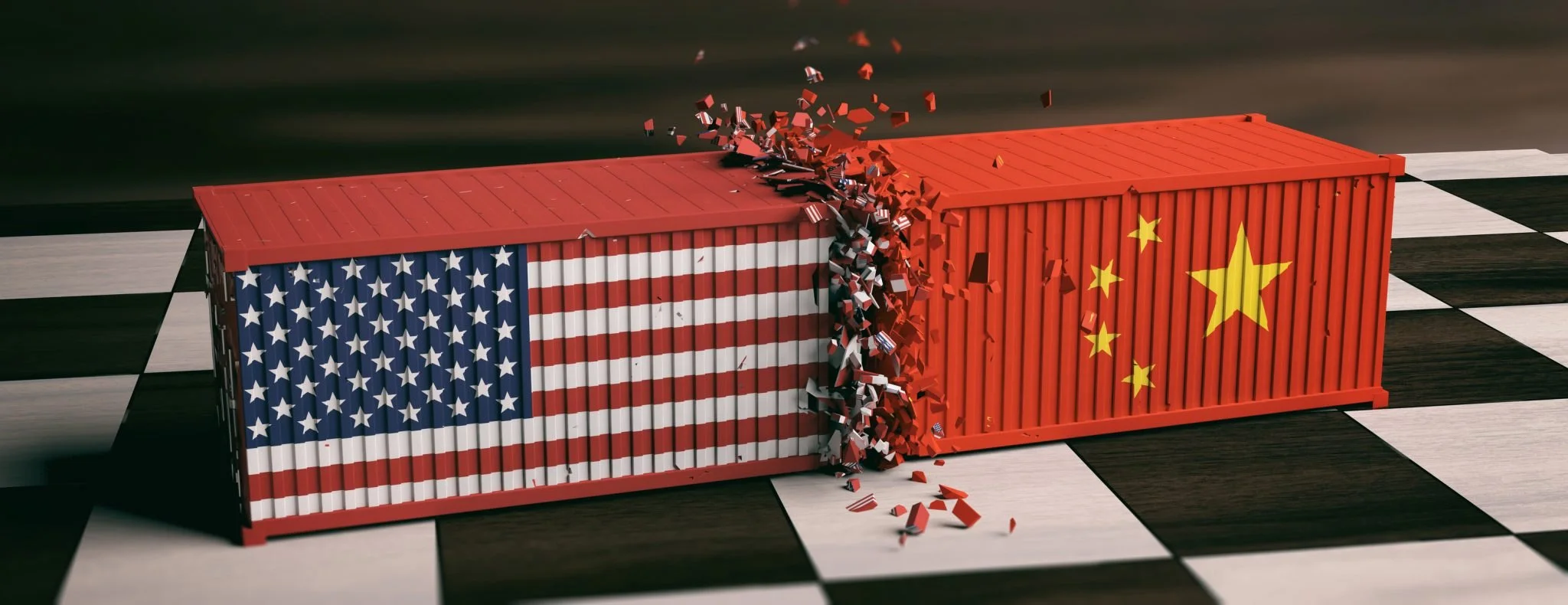
The recent decision by the Supreme Court of the United States has reshaped the legal framework behind several U.S. tariff actions, and for brands in the bespoke backpack and outerwear industry, this is not just abstract policy talk. It directly affects landed costs, pricing strategies, sourcing decisions, and long-term relationships with factories.
If you manufacture in Vietnam and potentially source materials from China, this ruling matters to you.
What the court actually changed
At the center of the ruling is the International Emergency Economic Powers Act (IEEPA). This law was used as the legal basis for imposing broad “reciprocal” tariffs under emergency authority.
The Court determined that IEEPA does not authorize sweeping, across-the-board tariff impositions. In short, that tool was used too broadly.
As a result:
IEEPA-based tariffs can no longer be lawfully applied.
Importers may challenge previously paid duties under that authority.
The executive branch must rely on other statutory frameworks to impose tariffs.

What was the Trump administration's response?
In response, President Trump issued a temporary measure under Section 122 of the Trade Act of 1974, which was implemented, allowing tariffs of up to 15% for a 150-day window.
So yes, in short, some tariffs vanished. But sadly, the trade landscape did not suddenly become simple.
Vietnam: short-term relief, long-term questions
Vietnam has become one of the most important production hubs for technical backpacks, performance outerwear, and sewn accessories. Many brands shifted production there over the past decade to mitigate exposure to tariffs on imports from China.
Prior to the ruling, layered duties, including IEEPA-based measures, pushed effective tariff burdens higher than many brands had originally forecast when relocating supply chains.
Post-ruling:
IEEPA surcharges are void.
A temporary 10% tariff (potentially increasing to 15%) is in place.
The measure is time-limited to 150 days.
For bespoke backpack and outerwear brands, this translates into an immediate recalibration of landed costs.
What this means financially
For a mid-range technical backpack with a $40 factory cost:
A 25% stacked tariff environment adds $10 per unit.
A 10–15% temporary tariff reduces that to $4–$6 per unit.
Across 50,000 units, that’s a difference of $200,000–$300,000 in duty exposure.
That delta can fund:
Additional inventory buffer
Retail margin protection
Marketing investment
Material upgrades
However, the 150-day clock under Section 122 creates uncertainty. Brands planning Fall/Winter production cycles need to model scenarios beyond the temporary window.
Vietnam remains extremely competitive, with skilled labor, excellent technical sewing capabilities, and a growing domestic material ecosystem, but tariff risk modeling must now be dynamic rather than static.
China: the IEEPA layer is gone, but Section 301 remains
China’s situation is more nuanced.
The IEEPA-based “reciprocal” tariffs are invalid. However, longstanding tariffs under Section 301 of the Trade Act, originally imposed during the 2018 trade conflict, remain fully in force.
For the bespoke gear industry, this is critical because:
Many high-performance fabrics still originate in China.
Hardware, buckles, trims, and specialty coatings often remain China-dominant.
Some insulated textile inputs are difficult to source elsewhere on a sufficient scale.
Even if your final assembly happens in Vietnam, Chinese-origin components may trigger separate duty classifications. The removal of IEEPA tariffs reduces volatility. However, it does not eliminate China's tariff exposure.
The practical implication is precision:
Tight HS code classification
Clear documentation of substantial transformation
Strategic evaluation of component origin
Small sourcing shifts, such as moving zipper production or switching webbing suppliers, can materially impact overall duty burden.
The Real Issue: legal authority vs. policy direction
The Supreme Court ruling only limits emergency-based tariff authority. It does not eliminate:
Section 301 tariffs
Section 232 national security tariffs
Anti-dumping investigations
Country-specific trade reviews
In other words, the tariff tool has changed; however, the USA’s broader trade strategy may not have. This distinction matters for long-term planning. The Supreme Court clarified how tariffs can be imposed, not whether they will be.
How does this impact the bespoke backpack and outerwear industry specifically?
Our industry has unique vulnerabilities:
1. Multi-Country Bill of Materials
A single technical backpack might involve:
Fabric from Taiwan or China
Hardware from China
Foam from Vietnam
Assembly in Vietnam
Final packaging from another origin
Tariffs can stack or shift depending on origin classification and transformation rules.
2. Tight Margins at Scale
Unlike luxury apparel with extreme markup multiples, performance gear often operates on disciplined margin structures. A 5–10% tariff swing can meaningfully alter the viability of wholesale pricing.
3. Retailer Sensitivity
Buyers expect predictability. Frequent tariff shifts complicate seasonal planning and MSRP consistency.
4. Long Development Cycles
Technical outerwear may take 12–18 months from concept to retail floor. Policy shifts mid-cycle disrupt forecasting assumptions.

Next Phase Underway: Section 301 Is Coming Back Strong
With IEEPA off the table and Section 122 unstable, the U.S. is falling back on its most powerful and legally robust trade tool: Section 301 of the Trade Act of 1974.
This is the same mechanism used to impose tariffs on China starting in 2018. But what is different this time: New investigations are broader and more strategic. They are expected to target:
Industrial overcapacity (especially in manufacturing sectors)
Supply chain dependencies
Labor and environmental compliance issues
Potential trade imbalances beyond China
Instead of broad tariffs like IEEPA, we may see:
Highly targeted tariffs
Product-specific duty increases
Country-specific measures (China and potentially Vietnam)
This creates a different type of challenge, one that is less random and with more granular complexity. It now makes it even more critical to really understand exactly where your product sits on the tariff schedule.
The Supreme Court’s ruling limits how tariffs can be imposed, but it does not change why they are being imposed. The U.S. policy goal of reducing reliance on certain imports, its political appetite for tariffs as a trade tool, and its focus on China and supply chain security have not changed.
The Broader Opportunity
Periods of trade volatility often reward disciplined operators.
Brands that understand:
Supply chain architecture
Tariff classification
Origin documentation
Legal authority boundaries
can gain leverage over competitors who treat tariffs as an afterthought.
The Supreme Court ruling restores a clearer constitutional boundary in trade authority. Which, in turn, is good for long-term legal predictability. But it doesn’t eliminate geopolitical tension or protectionist pressure.
For bespoke backpack and outerwear brands, the takeaway is simple: Tariff literacy is now part of product strategy. The companies that will thrive are not those chasing the cheapest factory this season, but those building resilient, flexible, well-documented supply chains capable of adapting as trade policy evolves.
If your brand is producing in Vietnam and sourcing components from China, this is the moment to revisit your tariff modeling, documentation standards, and long-term sourcing mix. The rules have just changed, and the opportunity now lies in how prepared you are to operate within them.

Kowide Outdoors – Who We Are
We are a Bespoke Backpack and Outdoor Apparel Manufacturer from Taiwan, operating as both a custom backpack manufacturer and a trusted outerwear manufacturer for global brands.
A leading OEM manufacturer with over 50 years of experience supplying products to world-renowned brands across Europe, Asia, Australia, and North America. Our world-class production facility in Vietnam, situated within easy reach of Ho Chi Minh City, is ideally suited to cover all manufacturing needs, from R&D, sourcing, and prototyping to bulk production.
Through technical expertise, ethical management, and rigorous quality control, Kowide Outdoors consistently strives to exceed client expectations, taking pride in helping clients achieve success by delivering the highest level of quality and unparalleled customer service.