How to Choose the Right Hardware for Your Backpack
Hardware is where the commercial, technical, and brand briefs intersect. Let us help you make the right hardware decisions for your design.
“Hardware is the unsung hero of every great backpack. A bag can be sewn from the finest fabrics in the world, but if the zipper fails on a mountain trail or a buckle snaps under load, the entire product fails. At Kowide Outdoors, hardware specification is one of the most consequential decisions we make with our OEM customers.” – Kowide Outdoors
Whether you're developing an ultralight trail running vest for a European outdoor brand, a ruggedised tactical pack for a North American client, or a fashion-forward urban daypack for an Asian retailer, the hardware you specify will define durability, aesthetics, price point, and the end user's daily experience. This guide walks through every major hardware category and how to make the right call for each.
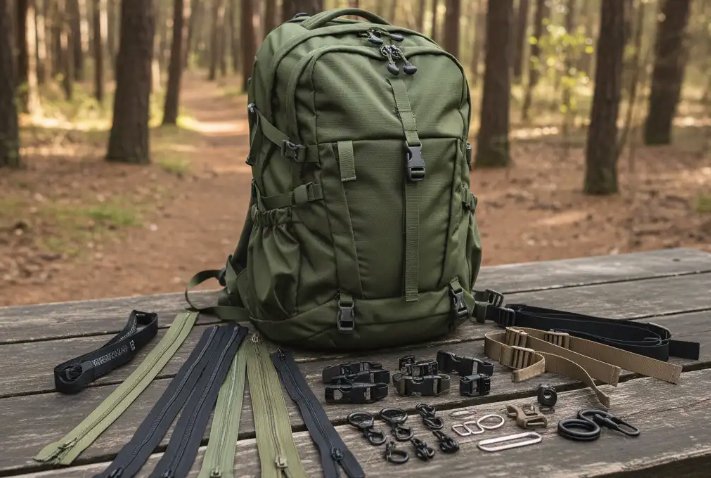
The hardware landscape: what you are choosing from
Modern backpack hardware spans a surprisingly wide range of components. Below are the core categories your design team will be specifying for any bag.
Zippers:
The most-used and most-tested component on any bag. Chosen for smoothness, weather resistance, and tooth strength.
Buckles & side-release clips:
Sternum straps, hip belts, and compression systems, buckles must hold under load and release cleanly under pressure.
Cord locks & toggles:
Closures for draw-cord openings, hood cinches, and cinch pockets. Often overlooked but frequently touched.
D-rings, loops & attachment points:
Critical for load distribution on external attachment systems and MOLLE webbing panels.
Snaps, hooks & carabiner clips:
Key fob rings, accessory clips, leash loops, and small parts that signal quality through their feel and finish.

Zippers: the single most important hardware decision
Ask any product manager what hardware complaint they receive most from end users, and the answer is almost always: the zipper. A stiff, catching, or prematurely failing zipper is a warranty issue, a review-killer, and a brand-reputation problem. Getting zippers right is non-negotiable.
Coil vs. moulded tooth:
Coil zippers (typically nylon) are lighter, more flexible, and self-healing if the slider jumps a tooth, making them the default choice for main compartments, pockets, and anything on a curved seam.
Moulded tooth zippers (typically plastic, resin, metal or VISLON®) are stiffer, more durable under heavy load, and offer a premium tactile feel. Metal teeth are common on premium luggage and fashion bags; acetal moulded teeth (like those on YKK's #10 Vislon) are preferred for heavy-duty outdoor gear.
Size matters: understanding zipper gauge
The number after a zipper's name indicates the closed-width of its chain in millimeters. A #3 is a light pocket or accessory zipper; a #5 is your workhorse main compartment zip; a #8 or #10 is reserved for heavy gear bags, luggage, or anything requiring maximum load tolerance. Oversizing is tempting but adds weight and cost; thus, matching gauge to realistic stress load is important.
Weather resistance:
For outdoor, technical, and adventure-category bags, weather resistance is increasingly expected rather than a premium feature. Options range from water-repellent (DWR-coated teeth) to water-resistant (bonded tape with seam tape backing) to waterproof (sealed zippers like the Tizip Masterzip or YKK AquaGuard with welded construction). Each step up adds cost, so specify only what the end use case demands.
Some of the brands that Kowide Outdoors works with:
Brand: YKK (Japan)
Best for: All categories, industry gold standard, broad spec availability, reliable quality at scale
Tier: Mid–Premium
Brand: O’Reach/AiCare (Taiwan)
Best for: A specialized line of high-performance, innovative, and functional fasteners
Tier: Mid-Premium
Brand: Tzip (Germany)
Best for: Premium, German-engineered waterproof and airtight plastic zippers designed for high-performance applications
Tier: Ultra-Premium
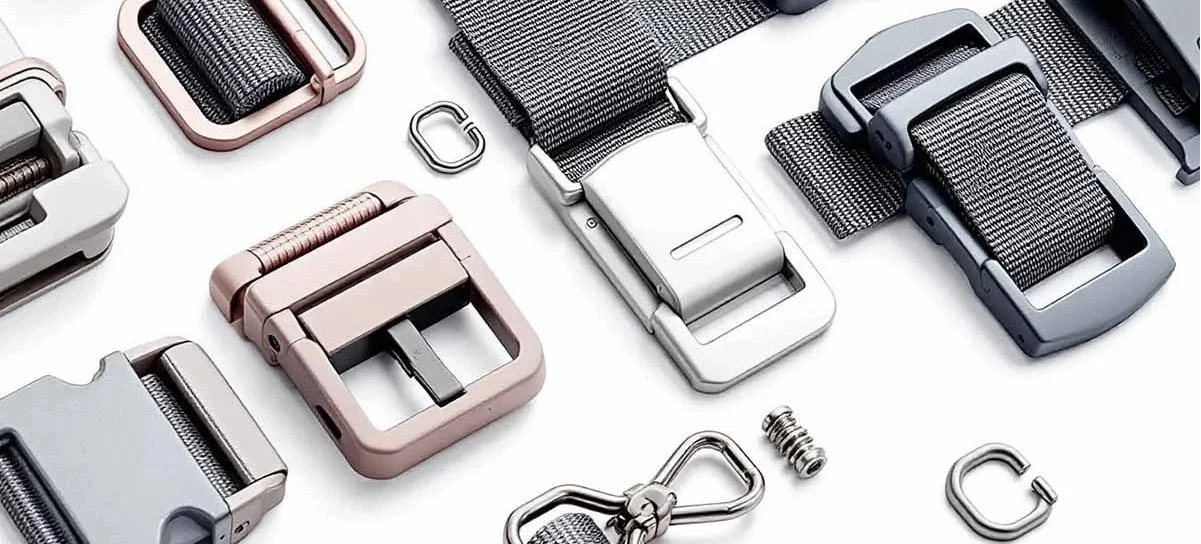
Buckles and side-release clips
Buckles are the structural hardware of a backpack's harness system. Sternum straps, load lifters, hip belts, compression straps. Every one of these relies on a buckle that must perform consistently across thousands of cycles while being operable by cold hands, with gloves on, or under the stress of a loaded pack, and in numerous other circumstances.
The importance of material choices:
Acetal resin (polyoxymethylene, or POM) is the default for most buckles. It offers excellent tensile strength, UV and chemical resistance, and a clean moulded finish. Nylon buckles are lighter and adequate for low-load applications.
For technical and tactical bags, aluminium alloy buckles deliver significantly higher load ratings and a premium aesthetic, at a cost and weight premium.
Stainless steel is reserved for marine and military applications where corrosion resistance is paramount.
Load rating: the number that matters
All buckles carry a rated load capacity, typically measured in kilonewtons (kN) or pounds. A standard daypack sternum buckle may only need to handle incidental loads, but a hip belt buckle on a 75L expedition pack could see significant force. Always spec the buckle to at least 2x the realistic maximum load and ensure your testing protocol verifies this under your intended use conditions. Side-release buckles for sternum straps are typically rated at 50–100kg static load; hip belts should be rated significantly higher.
Demographic Design Considerations:
There are also design considerations to be made based on the client's demographic. For example, clients targeting North American and European outdoor markets, buckle brand recognition can matter as much as performance. We regularly see brand briefs that specify "ITW Nexus side-release" as a contractual requirement, not because alternatives won't perform, but because it signals provenance to a technically-educated consumer base.
Key suppliers
Duraflex (USA)
Woojin Plastic (Korea)
YKK (Japan)
Fidlock (Germany)
Trimmers (Vietnam)
ITW Nexus (USA/China)
When it comes to buckles and clips, the market is served by a handful of manufacturers who, between them, cover virtually every price point and performance tier.
Duraflex and ITW Nexus remain the dominant names in the North American and European outdoor markets, with broad product ranges and strong brand recognition among technically minded consumers.
Woojin Plastic, based in Korea, is a strong, cost-effective alternative increasingly specified by Asian outdoor brands and price-conscious OEM clients alike.
YKK, best known for zippers, also produces a respected range of buckles and webbing hardware.
Fidlock, from Germany, occupies a premium niche with its magnetic closure systems, which are increasingly popular in cycling, running, and lifestyle bag categories where tool-free, one-handed operation is a key selling point.
Finally, Trimmers, based here in Vietnam, is a locally rooted supplier that offers tight lead times, competitive pricing, and the practical advantage of easy factory-to-supplier communication — making them a natural first call for many of our Ho Chi Minh City production runs.
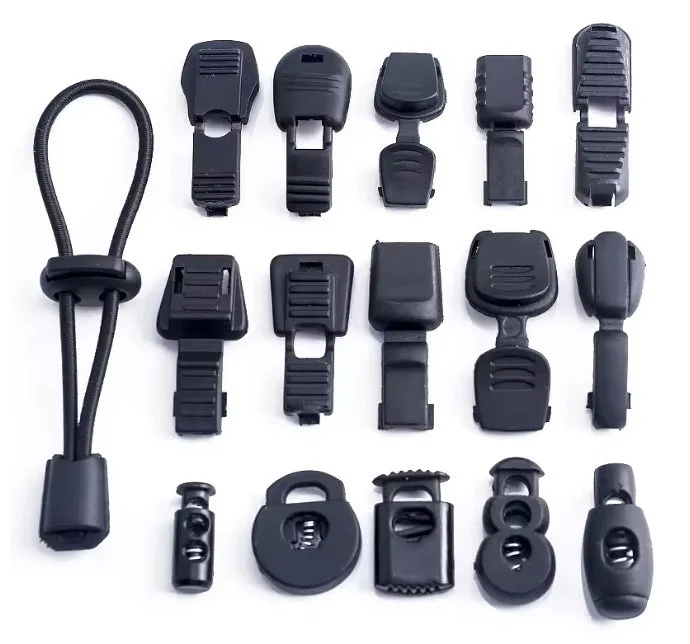
Cord locks and toggles
Perhaps the most underspecified category of backpack hardware, cord locks are touched repeatedly on every outing, tightening a hood in the rain, cinching a compression pocket, and securing a draw-cord top opening.
Single-barrel cord locks work for most pockets and cinch openings.
Dual-barrel locks are necessary where two cords must be controlled simultaneously, such as on pack hoods.
Oval and barrel-style aluminium cord locks (popular on technical alpine gear) offer one-handed operation and cold-weather usability that plastic alternatives struggle to match.
For children's gear or any products subject to safety standards, always verify that cord lock and drawcord specifications comply with the relevant market regulations, particularly the EU and UK children's garment cord safety standards, which are increasingly applied to bags and pack accessories.
Matching hardware to market: a practical framework
At Kowide Outdoors, our customers come from an unusually wide range of markets. A hardware package that's ideal for a Scandinavian outdoor retailer will be over-engineered (and over-priced) for a Southeast Asian fashion bag brand, and under-specced for a US tactical gear label. Here's how we think about market fit:
Technical outdoor
Zipper spec: YKK #5–#8 coil or moulded, DWR or AquaGuard
Buckle spec: Duraflex, Woojin or YKK alloy, rated 100kg+
Priority: Performance + weight
Urban / lifestyle
Zipper spec: YKK #5 , #8 coil, VISLON®, or Excella, standard or water-repellent
Buckle spec: Woojin, Fidlock or Duraflex plastic, mid-load rating
Priority: Aesthetics + value
Tactical / military
Zipper spec: YKK #10 moulded tooth, OD or Coyote colours
Buckle spec: ITW or Woojin heavy-duty
Priority: Strength + reliability
Travel
Zipper spec: YKK #8, #10 coil, VISLON®, or Aquaguaard standard
Buckle spec: Woojin or Trimmers, Standard load
Priority: Performance + durability
Testing and quality control: what our factory verifies
Specifying the right hardware is only half the equation. At Kowide, we always recommend that hardware undergo a defined QC process before it reaches the production line, and we encourage our clients to include hardware performance criteria in their product specifications from the outset.
Zipper cycle testing: all main compartment zippers should be tested to a minimum of 500 open/close cycles. Technical outdoor specifications often require 1,000+ cycles before signing off.
Buckle static load test: sternum and hip belt buckles should be tested to their rated load plus a safety margin.
Salt spray and UV exposure: for marine, coastal, or tropical market products, hardware should be submitted to accelerated weathering tests to verify corrosion and UV resistance.
Colourfastness of tape and pulls is particularly relevant for fashion clients where zipper tape colour matching is critical across multiple production runs.
Chemical compliance: for markets with strict REACH or CPSIA requirements (EU, US), we verify hardware compliance documentation from our approved supplier base.
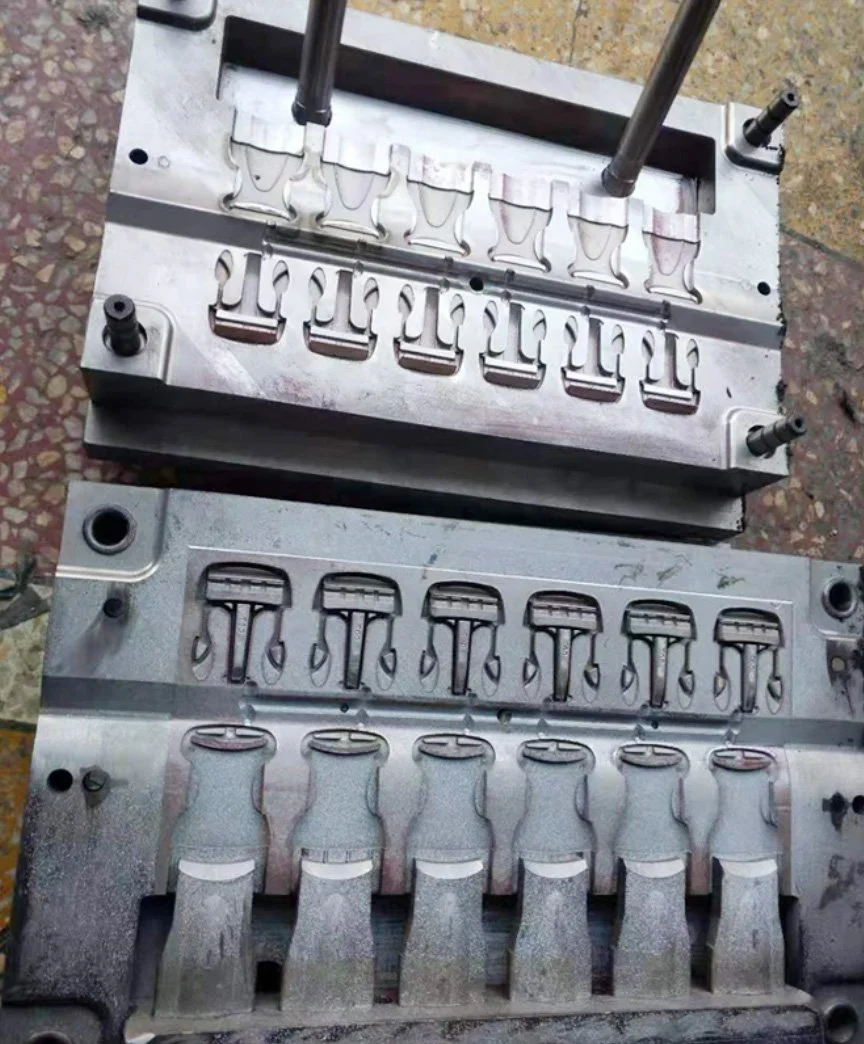
A note on customisation and MOQ
Custom hardware, branded zipper pulls, bespoke buckle colour combinations, embossed logos on D-rings, is one of the most effective ways to elevate a private-label bag into a branded product. Our factory works regularly with clients on custom hardware programs, but this requires forward planning.
Most custom zipper pull tooling carries a minimum order quantity of 500–1,000 pieces and a tooling cost that is amortised across the order. Custom injection-moulded buckles in proprietary shapes require higher MOQs and longer lead times, typically 90–120 days from artwork approval to delivery. For clients early in development, we often recommend starting with standard hardware in a custom colour-match, which achieves strong brand differentiation at significantly lower entry cost.
Our sourcing and development teams maintain relationships with more than 30 hardware suppliers across Vietnam, China, Japan, Korea, and Europe. Whether you need a standard YKK spec or a fully custom hardware program, we can advise on the most cost-effective path from concept to production.
The bottom line
Hardware specification is where the commercial, technical, and brand briefs intersect. The right zipper for one product is wrong for another. The best buckle for a North American outdoor retailer may be over-engineered for a Southeast Asian urban brand, or under-specced for a European military contractor.
What remains constant across Kowide's entire customer base is this: hardware decisions made early in development save money, protect brand reputation, and produce better products. The time to think about your zipper is not after the first production sample comes back; it's during the initial brief.
Working on a new backpack or outerwear program?
Kowide Outdoors offers full OEM development services from hardware specification through bulk production at our factory. Talk to our team about your next project.

Kowide Outdoors – Who We Are
We specialize in OEM backpack manufacturing, technical outerwear production, and Vietnam-based supply chain solutions for global brands. from Taiwan, operating as both a custom backpack manufacturer and a trusted outerwear manufacturer for global brands.
A leading OEM manufacturer with over 50 years of experience supplying products to world-renowned brands across Europe, Asia, Australia, and North America. Our world-class production facility in Vietnam, situated within easy reach of Ho Chi Minh City, is ideally suited to cover all manufacturing needs, from R&D, sourcing, and prototyping to bulk production.
Through technical expertise, ethical management, and rigorous quality control, Kowide Outdoors consistently strives to exceed client expectations, taking pride in helping clients achieve success by delivering the highest level of quality and unparalleled customer service.